

How Bricks are Made in Australia
From the very first settlements, bricks have been the foundation of Australian architecture. The story of our country's built environment is told in clay and fired earth. At Krause Bricks, we've been a part of that story since 1945. While the core process has remained constant, the methods and scale have changed.
Clay Extraction
The process starts with clay - no surprises there. Australia has a huge variety of high-quality clays and shales. These are quarried and transported to the brickworks where their transformation begins. We’re proud to source our clay from the Victorian Grampain goldfield, just 2km from our brickworks, where we process it on our site.

Shaping
Once the clay is prepared, it's time to form the bricks. In Australia, there are two primary methods: extrusion and pressing.
Extrusion is the most common process for commercial production. The clay is mixed with water, then forced through a die to create a continuous column of material. A wire cutter then slices the column into individual bricks. This method is efficient and produces a consistent, smooth surface. It's the go-to for many large-scale projects and for creating the uniform, modern aesthetic seen in much of the Melbourne bricks being used in new developments.
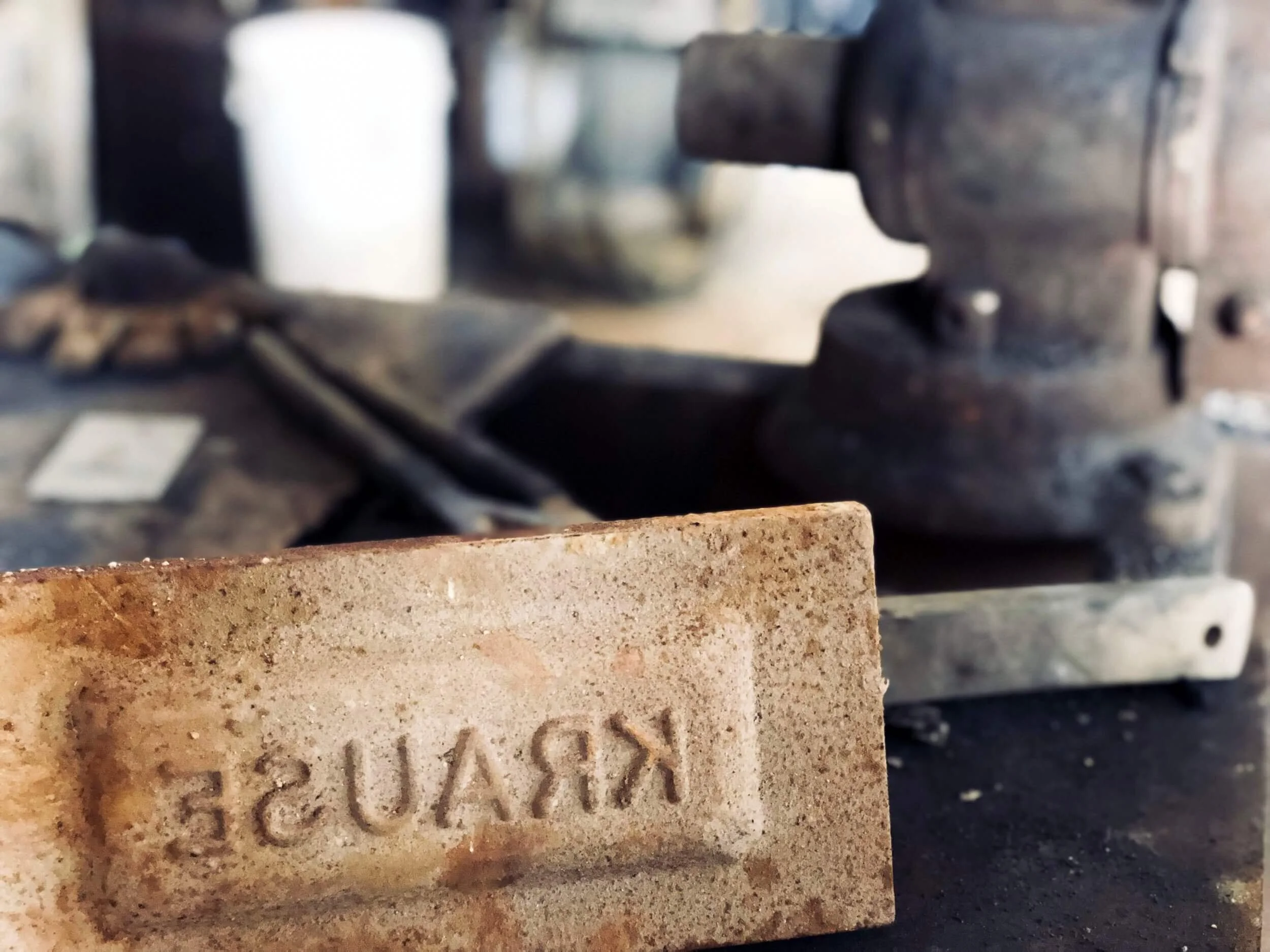
Pressing, or the soft-mud process, is a more traditional method. A wetter clay is pressed into individual molds. This is the method we use at Krause Bricks. It's a slower, more labour-intensive process, but the results are a more rustic, textured finish. The natural variations in the clay are highlighted, and each brick has its own unique character. The 'frog,' the indent you often see on the top of a brick, is created during this process.
Drying
After being shaped, the bricks must be dried to remove moisture. This is a critical step, as any remaining water would turn to steam and cause the bricks to explode in the kiln. Once dry, they are stacked carefully.
Firing
Firing is where the magic happens. Bricks are fired at incredibly high temperatures, typically between 1,000°C and 1,200°C. The duration and temperature of the firing directly impact the final colour and strength. Different clays and different temperatures produce different results. A brick with a high iron content will fire a deep red, while a brick with a lower iron content will result in a lighter, creamier colour. At Krause Bricks, we use traditional down-draught kilns, a method that allows us to control the heat distribution and atmosphere to achieve a wider range of colours and finishes.
In contrast, large commercial producers use modern tunnel kilns. These kilns are a long tunnel through which bricks are slowly moved on a conveyor. This is an extremely efficient process, allowing for continuous, high-volume production. While it’s perfect for creating a consistent product at a large scale, it can limit the artistic variation in colour and texture that our traditional methods allow. The demand for a specific shade of Melbourne bricks for a commercial tower is a different beast to the need for a beautiful, unique texture on a custom home.
Final Stages
After firing, the bricks are cooled and unloaded from the kiln. This is where the final stages of the process, blending and packing, take place. The blending process involves mixing bricks of different colours and textures to achieve a specific aesthetic or to create a custom blend for a project.
While the core process of making bricks has remained consistent for centuries, recent technological improvements have allowed for more automation. At Krause Bricks, we combine the old-school methods passed down through three generations with these advancements. This approach allows us to produce high-quality bricks at a commercial scale while maintaining the unique character that defines our work.

Bricks for Sale
Whether you're working on a residential or commercial project, we're here to help. As a family-run business with decades of experience, we’re always happy to share our knowledge.
Contact us to learn more about our wide range of premium bricks or to discuss your next project. You can also view some of our previous work on our website: